What to Bring When Moving Abroad: Pack It, Ship It or Buy It There?
Pack it, ship it, buy it there or leave it behind — how to decide what deserves space in your luggage.
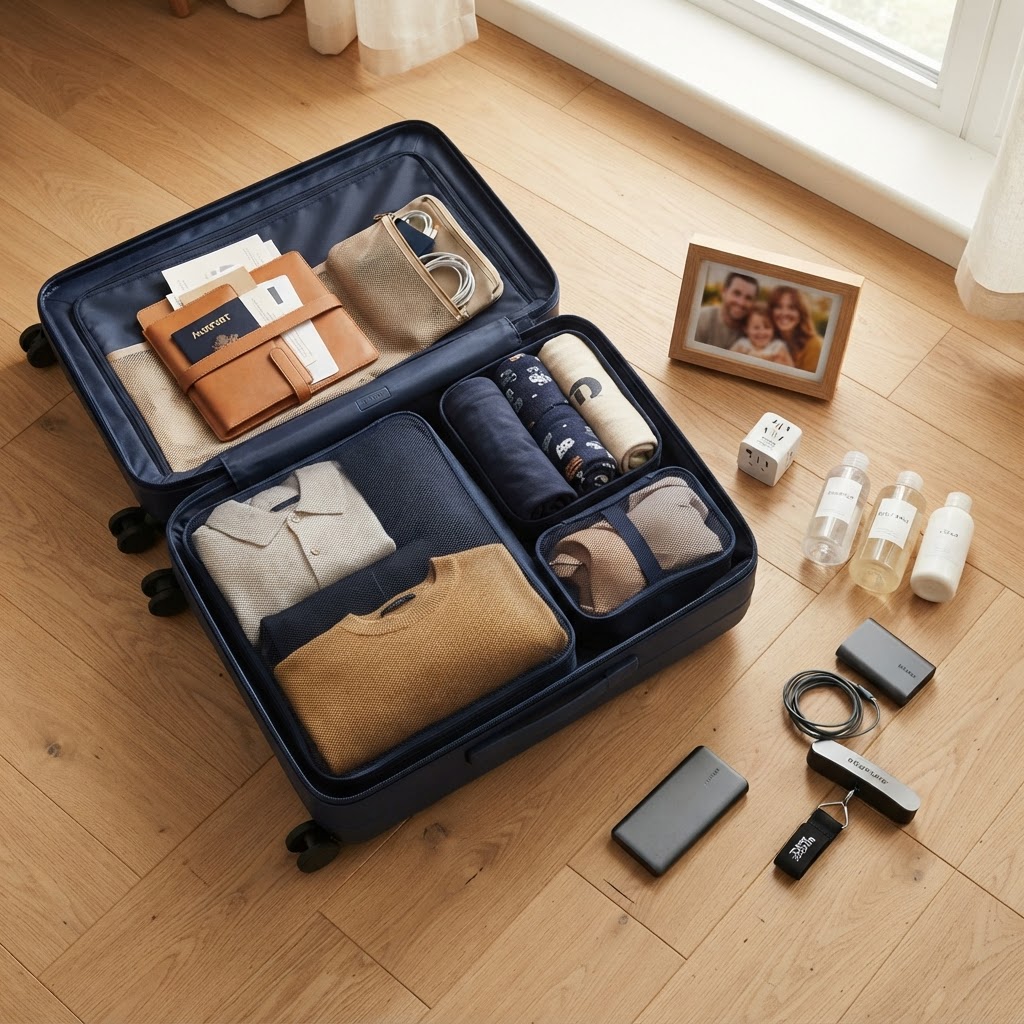
Moving abroad creates an unusual problem:
Suddenly, almost everything you own has to justify its existence.
That sofa?
The blender?
Your winter coats?
Thirty pairs of shoes?
The shampoo you have used for ten years?
Grandmother's photographs?
The hair dryer?
The expensive cookware?
The pile of cables you cannot identify but are afraid to throw away?
When you move internationally, the question is no longer:
“Do I own this?”
It becomes:
“Is this worth paying to take across the world?”
The answer is different for every item.
At AbroadFit, we recommend sorting your possessions into four categories:
PACK IT → SHIP IT → BUY IT THERE → LEAVE IT
That simple decision can save:
- luggage fees;
- shipping costs;
- storage;
- stress;
- customs complications; and
- a lot of unnecessary unpacking.
Let's work through what belongs in each category.
The AbroadFit Pack–Ship–Buy–Leave Test
For every item, ask five questions.
1. How difficult is it to replace?
A generic towel is usually easy to replace.
A medication, professional tool or product specifically suited to your hair or skin may not be.
2. How expensive is it to replace?
A cheap item may cost more to ship than buy again.
An expensive specialist item may be worth carrying.
3. How much space does it take?
A lightweight document organiser costs almost nothing in luggage space.
A duvet can fill half a suitcase.
4. Will it work in the destination?
Electrical voltage, plugs, local standards and climate can matter.
5. How soon will I need it?
Some items need to be available the minute you land.
Others can wait until your shipment arrives.
Quick decision guide
1. Documents — Pack Them
There are some things you should never put into an international shipping container.
Important documents belong with you.
Depending on your circumstances, these might include:
- passports;
- visas;
- residence approvals;
- birth certificates;
- marriage certificates;
- divorce documents;
- adoption records;
- professional licences;
- qualifications;
- transcripts;
- police certificates;
- medical records;
- vaccination records;
- prescriptions;
- financial documentation;
- employment contracts;
- insurance documents;
- property records;
- school records; and
- pet documentation.
Carry originals where required and keep secure digital copies.
Consider storing encrypted copies in secure cloud storage as well.
Never assume an important document will be easy to replace internationally.
Keep Your Essentials With You
A document organiser keeps passports, boarding information, immigration paperwork and family travel documents together. A carry-on backpack keeps documents, technology, a change of clothing and other first-night essentials with you. As an Amazon Associate, AbroadFit earns from qualifying purchases.
TOPBAG Family Passport & Travel Document Organiser
Documents & OrganisationA practical organiser for passports, travel documents, cards and other important paperwork when moving or travelling abroad.
View on AmazonMATEIN 40L Carry-On Travel Backpack
Luggage & Travel AccessoriesA spacious carry-on travel backpack suited to study, work, short trips and international relocation.
View on Amazon2. Pack a 72-Hour Arrival Kit
Imagine your checked luggage is delayed.
Or your shipment arrives six weeks later than planned.
Could you function for three days?
Your carry-on or arrival bag should ideally contain enough to cover the first 48–72 hours.
Consider:
- passport and documents;
- medication;
- phone;
- chargers;
- power bank;
- travel adapter;
- underwear;
- sleepwear;
- one or two changes of clothes;
- essential toiletries;
- toothbrush;
- glasses/contact lenses;
- basic skincare;
- important children's items;
- basic baby supplies where relevant;
- essential work equipment; and
- anything you cannot easily function without.
Think of this as:
your first life abroad in one bag.
For Your First 72 Hours
A universal adapter helps compatible devices fit different plug standards — it does not necessarily convert voltage. A portable charger keeps your phone alive through flights, airport transfers, SIM setup, navigation and apartment check-in. As an Amazon Associate, AbroadFit earns from qualifying purchases.
Ceptics 45W Universal Travel Adapter
Travel AdaptorsA compact universal travel adapter for keeping phones, laptops and other devices powered across international destinations.
View on AmazonMiady 2-Pack 10,000mAh Portable Chargers
Technology & ConnectivityPortable power banks for keeping phones and other USB devices charged during travel and day-to-day life abroad.
View on Amazon3. Clothing — Pack Selectively
One of the easiest ways to overpack is to imagine that every item of clothing deserves to move abroad.
It doesn't.
Start with climate.
Ask:
- How hot is summer?
- How cold is winter?
- Is the climate humid?
- Is there a rainy season?
- What do people wear to work?
- Are certain types of clothing expensive locally?
- Are your sizes easy to find?
- Are specialty shoes difficult to replace?
Prioritise:
- frequently worn basics;
- professional clothing;
- correctly sized shoes;
- specialised sportswear;
- climate-appropriate clothing;
- hard-to-replace sizes; and
- favourite items you actually wear.
Do not use international relocation as an expensive way to move clothing you haven't worn in four years.
4. Use Space Before Buying More Luggage
Before paying for another suitcase, reduce the volume of what you already plan to take.
This is especially useful for:
- jackets;
- sweaters;
- bedding;
- towels;
- soft clothing; and
- seasonal garments.
Make More Room in the Luggage You Already Have
Vacuum bags compress bulky soft items, packing cubes organise luggage by clothing type, family member or when items will be needed, and a luggage scale lets you check weight before you reach the airport. As an Amazon Associate, AbroadFit earns from qualifying purchases.
Vacuum Storage Bags with Hand Pump — 20 Combo Pack
Packing & OrganisationSpace-saving storage bags with a hand pump for compressing clothing, bedding and other soft items when packing for a move.
View on AmazonBAGAIL Packing Cubes
Packing & OrganisationReusable packing organisers designed to separate clothing and essentials and make luggage easier to manage.
View on AmazonTravel Inspira Digital Luggage Scale
Luggage & Travel AccessoriesA compact digital luggage scale for checking baggage weight before flights and avoiding last-minute surprises.
View on Amazon5. Haircare — Don't Assume You Can Buy Everything
This category deserves much more attention than most international packing guides give it.
If you rely on particular:
- shampoo;
- conditioner;
- oils;
- treatments;
- styling products;
- gels;
- relaxers;
- colour products;
- edge-control products;
- curl products; or
- specialist hair accessories,
research availability before you move.
This is particularly important for:
- Afro hair;
- textured hair;
- curly hair;
- chemically treated hair;
- colour-treated hair; and
- people with scalp sensitivities.
A product may exist locally but:
- cost much more;
- only be available online;
- have a different formulation;
- be difficult to find;
- or only be sold in major cities.
You don't need to pack a five-year supply.
But bringing enough familiar product for the first several weeks or months can give you time to learn the local market.
Bring Familiar Products in Manageable Amounts
Refillable travel bottles make it easy to carry a transition supply of your usual shampoo, conditioner, moisturiser, skincare and hair products. As an Amazon Associate, AbroadFit earns from qualifying purchases.
Tocelffe 18-Pack TSA-Approved Silicone Travel Bottles
Packing & OrganisationRefillable travel containers for taking essential shampoo, conditioner, skincare and toiletries during your move and first days abroad.
View on Amazon6. Skincare & Personal Care — Pack Enough to Transition
You may adapt quickly to local products.
But the first few weeks after an international move may not be the best time to completely redesign your skincare routine.
Consider bringing enough of your normal essentials to give yourself time to investigate local alternatives.
Prioritise:
- prescription products;
- sensitive-skin products;
- allergy-friendly products;
- specialist skincare; and
- products you know are difficult to replace.
Don't overdo it.
Liquids are heavy.
The goal is not to create an international warehouse inside your suitcase.
It is to create a transition period.
7. Medication — Pack Carefully and Legally
Prescription medicine requires more planning than ordinary toiletries.
Before departure:
- research destination rules;
- confirm whether the medication is legal there;
- check quantity limits;
- retain prescriptions;
- consider a doctor's letter;
- keep medicine in original packaging where required;
- understand refrigeration requirements; and
- investigate local availability.
Do not assume a medication available over the counter at home will have the same legal status abroad.
Keep essential medication in your carry-on whenever permitted rather than checked luggage.
8. Electronics — Check Voltage Before Packing
Electronics are one category where “bring everything” can become expensive.
Check each device for:
- voltage;
- frequency;
- plug type;
- power requirements; and
- warranty implications.
Many modern laptops, phone chargers, tablets and cameras support a wide voltage range.
Some hair dryers, styling tools, kettles, kitchen appliances and household devices may not.
A plug adapter changes the physical connection.
It does not automatically make an appliance electrically compatible.
If a bulky appliance is incompatible, buy it there.
9. Technology You May Want Immediately
Consider carrying:
- laptop;
- phone;
- tablet;
- chargers;
- external storage;
- headphones;
- necessary work equipment;
- power bank; and
- travel adapter.
If you work remotely, consider what would happen if your laptop were lost or damaged.
Have:
- secure backups;
- cloud access;
- password recovery;
- two-factor authentication; and
- critical files stored safely.
Your livelihood should not depend on one physical device surviving the flight.
10. Home Comforts — Bring Some, Not Your Whole House
This is where emotional value matters.
There is something comforting about having a few familiar things when everything else is new.
Possible home comforts include:
- favourite pillowcase;
- lightweight blanket;
- framed photograph;
- small decorative object;
- favourite mug;
- sentimental kitchen item;
- family photographs;
- small religious/spiritual items;
- children's comfort objects;
- favourite recipes; and
- familiar fragrance.
These aren't always financially rational.
They don't need to be.
Moving abroad is a major transition.
A few familiar things can make a temporary apartment feel less temporary.
11. Bedding — Usually Buy It There
Bedding is bulky.
Unless you have highly specific needs, unusual sizing, allergies, specialist bedding or a deeply loved item, basic sheets, pillows, duvets and towels can often be purchased after arrival.
Be aware that bed and mattress sizes may differ between countries.
Your fitted sheets from home may not fit your new mattress.
12. Kitchen Items — Be Selective
Most people do not need to ship an entire kitchen.
Usually worth considering:
- a favourite specialist knife where legally permitted and packed appropriately;
- small specialty cooking tools;
- difficult-to-replace cultural cooking items; and
- sentimental cookware.
Usually worth replacing:
- plates;
- glasses;
- cutlery;
- basic pots;
- toaster;
- kettle; and
- generic appliances.
Again:
shipping cost versus replacement cost.
13. Food — Don't Try to Relocate Your Supermarket
Food is a major part of feeling at home.
But international food transport can involve:
- customs restrictions;
- agriculture controls;
- animal-product restrictions;
- quantity limits;
- leakage; and
- weight.
Research before packing food.
Where permitted, people sometimes prioritise:
- favourite spices;
- specialty seasonings;
- hard-to-find dry goods; and
- culturally important ingredients.
Never assume a food item can legally enter another country.
When in doubt, verify first.
14. Shoes — More Important Than People Think
Shoes can be surprisingly difficult to replace if you:
- wear uncommon sizes;
- require orthotics;
- need wide/narrow fits;
- need specialist footwear; or
- have favourite professional shoes.
Pack the pairs you genuinely use.
Don't move twenty pairs just because you own them.
15. Children's Items — Prioritise Continuity
Children may benefit from familiar objects during a major transition.
Consider:
- favourite toy;
- comfort blanket;
- books;
- familiar bedtime items;
- school records;
- educational materials;
- favourite snacks for travel;
- medication; and
- devices.
Avoid filling international shipping containers with toys that can easily be replaced.
Bring enough familiarity to create continuity.
16. Pets — Their Belongings Are the Easy Part
The challenge with pets is normally not packing bowls and toys.
It is:
- import rules;
- vaccines;
- microchips;
- veterinary certificates;
- permits;
- airline rules;
- travel crates;
- quarantine; and
- housing restrictions.
Start this process early.
A familiar blanket or toy can be useful during transition, but the paperwork matters far more.
17. Sentimental Items — This Is Not Just a Financial Decision
Some items cannot be replaced.
Examples include:
- family photographs;
- inherited jewellery;
- letters;
- heirlooms;
- children's keepsakes;
- important artwork; and
- religious objects.
Ask:
Would I be devastated if this disappeared in shipping?
If yes, don't casually put it into an international container.
Consider carrying small irreplaceable objects personally where legal and practical.
For extremely valuable items, investigate professional transport and appropriate insurance.
18. Furniture — Often Buy It There
Furniture is expensive to move because it is large, heavy, difficult to protect and expensive to insure.
There are exceptions.
You may own antiques, heirlooms, exceptionally valuable furniture or specialist ergonomic furniture.
But for generic furniture, compare:
shipping + customs + insurance + delay
with
replacement cost abroad.
The answer may surprise you.
19. Your Car — Run the Numbers First
Moving a vehicle internationally may involve:
- shipping;
- duties;
- taxes;
- inspections;
- registration;
- insurance;
- conversion requirements;
- left-hand versus right-hand driving; and
- parts availability.
Sometimes it makes financial sense.
Often it doesn't.
Do the full calculation rather than focusing only on shipping cost.
20. The Things People Most Often Regret Packing
Common overpacking candidates include:
- generic kitchenware;
- old clothing;
- inexpensive furniture;
- excessive toiletries;
- too many books;
- duplicate electronics;
- incompatible appliances;
- items kept “just in case”; and
- decor you don't particularly love.
If you haven't used it recently at home, ask yourself why it deserves international shipping.
21. The Things People May Regret Leaving
Depending on the person and destination:
- favourite personal-care products;
- specialist hair products;
- hard-to-find clothing sizes;
- comfortable shoes;
- medication;
- specialist cooking ingredients;
- important documents;
- sentimental items;
- prescription glasses;
- small professional tools; and
- familiar children's items.
This is why destination research matters.
What you pack depends on where you're going.
Find your personalised pathway and destination starting point.
The AbroadFit Packing Matrix
| Category | Usually Pack | Consider Shipping | Usually Buy There |
|---|---|---|---|
| Passports/documents | ✓ | Never | — |
| Medication | ✓ | Rarely | Depends |
| Everyday clothing | ✓ | Sometimes | ✓ |
| Shoes | ✓ | Sometimes | ✓ |
| Hair products | ✓ initially | Rarely | Research first |
| Toiletries | Small supply | No | ✓ |
| Laptop/phone | ✓ | No | Depends |
| Hair appliances | Only if compatible | Rarely | Often |
| Bedding | A few favourites | Rarely | ✓ |
| Furniture | Rarely | Sometimes | Often |
| Kitchenware | Specialist only | Sometimes | ✓ |
| Food/spices | If legal | Rarely | Research |
| Family photos | ✓ | Carefully | Cannot replace |
| Children's comfort items | ✓ | Some | ✓ |
| Pet essentials | ✓ | Some | ✓ |
Passports/documents
- Usually Pack
- ✓
- Consider Shipping
- Never
- Usually Buy There
- —
Medication
- Usually Pack
- ✓
- Consider Shipping
- Rarely
- Usually Buy There
- Depends
Everyday clothing
- Usually Pack
- ✓
- Consider Shipping
- Sometimes
- Usually Buy There
- ✓
Shoes
- Usually Pack
- ✓
- Consider Shipping
- Sometimes
- Usually Buy There
- ✓
Hair products
- Usually Pack
- ✓ initially
- Consider Shipping
- Rarely
- Usually Buy There
- Research first
Toiletries
- Usually Pack
- Small supply
- Consider Shipping
- No
- Usually Buy There
- ✓
Laptop/phone
- Usually Pack
- ✓
- Consider Shipping
- No
- Usually Buy There
- Depends
Hair appliances
- Usually Pack
- Only if compatible
- Consider Shipping
- Rarely
- Usually Buy There
- Often
Bedding
- Usually Pack
- A few favourites
- Consider Shipping
- Rarely
- Usually Buy There
- ✓
Furniture
- Usually Pack
- Rarely
- Consider Shipping
- Sometimes
- Usually Buy There
- Often
Kitchenware
- Usually Pack
- Specialist only
- Consider Shipping
- Sometimes
- Usually Buy There
- ✓
Food/spices
- Usually Pack
- If legal
- Consider Shipping
- Rarely
- Usually Buy There
- Research
Family photos
- Usually Pack
- ✓
- Consider Shipping
- Carefully
- Usually Buy There
- Cannot replace
Children's comfort items
- Usually Pack
- ✓
- Consider Shipping
- Some
- Usually Buy There
- ✓
Pet essentials
- Usually Pack
- ✓
- Consider Shipping
- Some
- Usually Buy There
- ✓
Create Your Personal Packing List
Keep with you
- Passports
- Immigration documents
- Important certificates
- Medication
- Electronics
- Chargers
- Emergency money/cards
- 72-hour clothing
- Essential toiletries
- Irreplaceable small valuables
Checked luggage
- Clothing
- Shoes
- Additional toiletries
- Haircare
- Non-critical personal items
- Home comforts
Shipment
Only items that pass:
value + usefulness + compatibility + economics
Buy after arrival
- most household basics;
- bulky generic items;
- locally incompatible appliances;
- many cleaning products;
- many kitchen basics; and
- furniture where replacement is economical.
Before packing your life, work out where you're actually going.
What you bring depends on climate, housing, pathway, work, family, lifestyle and destination.
Free personalised starting point. No purchase required.
Frequently Asked Questions
What should I bring when moving abroad?
Prioritise important documents, medication, electronics, frequently worn clothing, difficult-to-replace personal products and a few meaningful home comforts. Compare the cost of shipping bulky items with replacing them after arrival.
What should I pack in my carry-on when moving overseas?
Carry passports, immigration documents, medication, electronics, chargers, valuables and enough clothing and toiletries for at least the first couple of days in case checked luggage is delayed.
Should I ship my furniture when moving abroad?
It depends on the furniture's value, shipping cost, customs charges and replacement cost at your destination. Generic furniture is often more economical to replace, while valuable or sentimental pieces may justify shipping.
Should I bring bedding when moving abroad?
A small amount may be useful, but bedding is bulky and usually replaceable. Bed sizes can also differ between countries, so existing fitted sheets may not fit your new mattress.
Should I bring toiletries when moving abroad?
Bring enough essential or preferred products to cover your initial settling-in period, especially if you have sensitive skin, textured hair or products that may be difficult to replace.
Can I bring my hair dryer or straightener abroad?
Only if it is electrically compatible with the destination. Check voltage and frequency requirements. A plug adapter alone does not necessarily make an appliance safe to use.
Should I bring food when moving overseas?
Only after checking customs and agricultural rules. Countries may restrict meat, dairy, plants, fresh food and other products.
What documents should I bring when moving abroad?
Depending on your situation, you may need passports, visas, birth and marriage certificates, qualifications, employment documents, medical records, prescriptions, financial records, school documents and pet paperwork.
Is it cheaper to ship belongings or buy new ones abroad?
It depends on shipping cost, customs, insurance and local replacement prices. Compare total costs item by item rather than assuming shipping is cheaper.
How many suitcases should I take when moving abroad?
There is no ideal number. Take what makes financial and practical sense for your move. Additional baggage may be worthwhile for difficult-to-replace items but inefficient for inexpensive bulky possessions.
What are the most important things not to forget when moving abroad?
Passports, immigration paperwork, medication, access to money, essential technology, important records and anything genuinely difficult or impossible to replace should receive priority.
Related Guides
What Nobody Tells You About Moving Abroad: 15 Realities to Know Before You Go
Moving abroad can change your finances, routines, relationships and even what you buy at the supermarket. Here are 15 realities worth thinking about before you go.
Read GuideHow Much Money Do You Really Need to Move Abroad?
There is no single amount everyone needs to move abroad. Your real number depends on your pathway, household, housing, income gap, relocation costs and emergency reserve. Here’s how to calculate it.
Read GuideHow to Move Abroad: A Step-by-Step Guide
Thinking about moving abroad but not sure where to begin? Start with the decisions that matter most. This guide walks you through AbroadFit’s five-stage framework: pathway → feasibility → country → plan → move.
Read GuideMoving to Portugal: Cost, Visas, Housing & What Life Is Really Like
A practical guide to moving to Portugal — legal pathways, affordability by region, housing, healthcare, language and the everyday realities newcomers often underestimate.
Read Guide