Moving to Costa Rica: Cost, Visas, Housing & What Life Is Really Like
Could you realistically build a life in Costa Rica? Pathways, costs and the everyday realities.
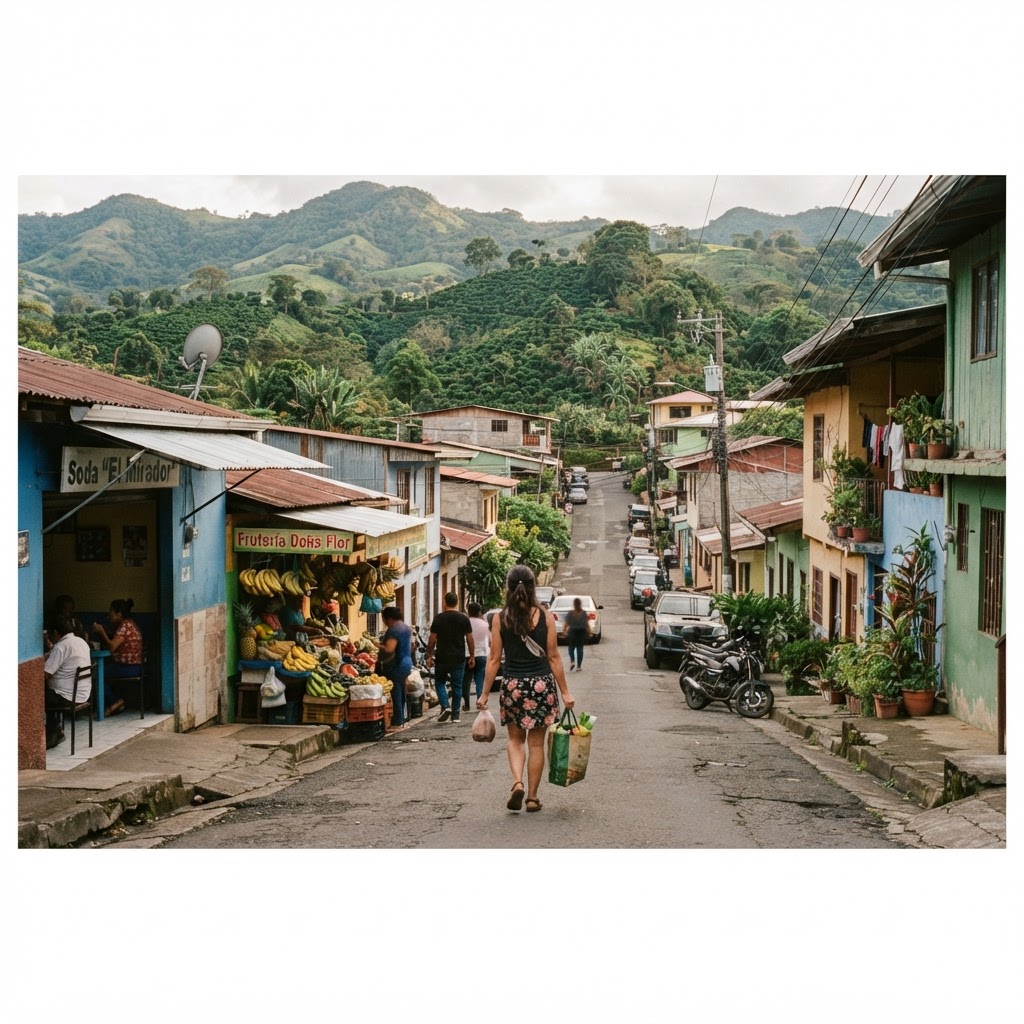
Costa Rica has an image that's hard to beat.
Rainforest. Two coastlines. Wildlife in the garden. A famous “pura vida” outlook. A long-established community of retirees and remote workers.
Much of that is real.
But the useful question isn't whether Costa Rica is beautiful.
It's this:
Could I realistically build a life in Costa Rica?
That depends on your pathway, your budget, where you'd live, how you'd handle roads, rain, Spanish and administration — and whether everyday life suits you once the vacation glow fades.
This guide follows the AbroadFit framework:
Pathway → Feasibility → Country → Plan → Move → Live
1. Why People Consider Costa Rica
- Nature — rainforests, volcanoes, beaches and wildlife are part of daily life in many areas.
- Climate variety — from the spring-like Central Valley to hot coastal lowlands.
- Established residence routes — well-known categories for pensioners, people with passive income, investors and remote workers.
- Proximity to North America — relatively short flights to many US and Canadian cities.
- Social healthcare system — legal residents generally join the national system, the CCSS (commonly called the CAJA).
- Expat communities — particularly in the Central Valley and parts of the Pacific coast.
The trade-offs include higher costs than many people expect, slow bureaucracy, road conditions and a strong need for Spanish outside expat areas.
2. Who Costa Rica May Suit
- retirees with a qualifying lifetime pension;
- people with stable passive income or savings;
- remote workers earning foreign income;
- investors meeting investment thresholds;
- families who value nature and outdoor life; and
- people who prioritise lifestyle and environment over maximum convenience.
3. Legal Pathways
Costa Rica's best-known temporary residence categories are:
Pensionado (pensioner)
Requires proof of a lifetime pension of at least US$1,000 per month from a government programme, social security or a recognised private retirement plan.
Rentista (stable passive income)
Requires proof of stable, permanent passive income of at least US$2,500 per month for at least two years. A common way to show this is a bank letter confirming US$60,000 available to be transferred to Costa Rica over two years. Rentista status is generally reviewed and renewed periodically.
Inversionista (investor)
Based on a qualifying investment in Costa Rica — commonly cited from around US$150,000 in approved assets such as real estate or a business. Requirements depend on the investment type.
Digital nomad (remote worker)
For people working remotely for employers or clients outside Costa Rica. According to the Costa Rica Tourism Board, applicants need a stable net income of at least US$3,000 per month, with a higher threshold for families, plus health insurance. It's a temporary stay category and not generally a direct route to residence.
Other routes
Routes also exist through family ties (for example, marriage to a Costa Rican or having a Costa Rican child), employment and other categories. Permanent residence is generally available after a period of temporary residence.
Documents usually need apostilles and official Spanish translations. Processing times can be long, and many applicants use a Costa Rican immigration lawyer.
4. Can You Afford Costa Rica?
Costa Rica is often more expensive than people expect — frequently among the pricier countries in Central America, especially for imported goods, cars and electronics.
In broad terms:
- San José and its western suburbs (Escazú, Santa Ana) — convenient, with international shopping, hospitals and services; popular areas carry high rents.
- Central Valley towns (Atenas, Grecia, San Ramón and others) — popular with retirees for mild weather; often more moderate costs, though a car may be needed.
- Guanacaste and the Pacific beach towns — tourism strongly influences prices; resort areas can be expensive.
- Southern Pacific and Caribbean coast — more rural, with varied costs and more limited services.
- Smaller inland towns — often lower cost, more Spanish needed and fewer international amenities.
Cars and imported products carry high import taxes. Air conditioning adds cost at the coast.
Housing, transport, CAJA contributions and imported goods usually decide your real number.
5. Housing
- Rent first — ideally long enough to experience the rainy season before buying.
- Furnished rentals — common in expat and tourist areas; seasonal pricing can apply near beaches.
- Deposits — typically at least one month's rent, sometimes more.
- Access — check road access in the rainy season, especially for rural and hillside properties.
- Humidity and insects — ask about mould, screens and ventilation.
- Utilities and internet — confirm reliability before committing, particularly if you work remotely.
- Buying property — use an independent Costa Rican lawyer for title checks and due diligence.
6. Healthcare
Costa Rica's public system, run by the CCSS (CAJA), provides care to enrolled residents. Many residents appreciate having access to it, while also noting that waits for some specialist appointments and procedures can be long.
There is also a significant private sector, including private hospitals in the San José area. Many foreign residents use a mix — the CAJA for some needs and private care or private insurance for faster access.
Outside the Central Valley, specialist services can be more limited, and serious cases may require travel to San José.
For US retirees: according to Medicare.gov, Medicare usually does not cover health care outside the U.S., with limited exceptions.
Check the availability of your prescription medicines before moving. This guide is not medical advice.
7. Banking & Administration
Costa Rica is known for slow, paperwork-heavy administration.
Things to expect:
- apostilled and translated documents for residence;
- long processing times for residence applications;
- banks requesting proof of income, source-of-funds documentation and residence status;
- in-person appointments; and
- processes that often go more smoothly with a local lawyer or helper.
The local currency is the Costa Rican colón. US dollars are also widely used for larger transactions such as rent and property, but day-to-day spending is often in colones — so exchange rates affect your budget.
Keep Your Paperwork Together
Residence filings, bank visits and CAJA registration often require apostilled originals and copies. A document organiser keeps everything together, and RFID sleeves protect cards while travelling. As an Amazon Associate, AbroadFit earns from qualifying purchases.
TOPBAG Family Passport & Travel Document Organiser
Documents & OrganisationA practical organiser for passports, travel documents, cards and other important paperwork when moving or travelling abroad.
View on AmazonWHonor RFID Blocking Cards — 6 Pack
Travel SecurityCompact RFID-blocking cards designed to provide an additional layer of protection for compatible contactless cards while travelling.
View on Amazon8. Transport
- Buses connect most towns and are affordable, though routes can be slow.
- Taxis and rideshare are common in and around San José.
- Roads can be narrow, winding and affected by rain; some rural routes are unpaved.
- Cars are expensive to buy because of import taxes, but many residents outside San José find one necessary.
If you don't want to drive, choose a town with good bus connections and walkable daily essentials.
9. Language
Spanish is the official language. English is common in tourism, some businesses and expat communities.
Outside those settings, Spanish matters for healthcare, government offices, landlords, tradespeople, smaller towns and building genuine friendships. Learning even basic Spanish makes daily life much easier.
10. Everyday Convenience
- San José area — large supermarkets, malls, pharmacies and delivery apps.
- Smaller towns — local shops, markets and “sodas” (small local diners); fewer specialty options.
- Addresses — Costa Rica has traditionally used landmark-based directions rather than precise street addresses, which can complicate deliveries.
- Power and internet — generally available, but outages can occur, especially in storms and rural areas.
- Pace — “pura vida” can mean relaxed service and slower timelines.
11. Amazon & Online Shopping
There is no local Amazon site for Costa Rica, and direct international delivery can be limited or costly.
Many residents use courier or mail-forwarding services (“casilleros”) that provide a US address — often in Miami — and deliver to Costa Rica for a fee based on weight.
Things to know:
- import duties and taxes can be significant, particularly on electronics;
- delivery takes longer than in the US;
- some items may be restricted; and
- costs rise quickly for heavy or bulky items.
12. Hair, Beauty & Personal Care
Mainstream beauty and personal-care brands are available in supermarkets, pharmacies and malls, especially around San José — but imported products are often more expensive than at home.
For textured, curly or Afro hair, specialist salons and products are more likely to be found in the San José area and on the Caribbean coast, where Afro-Caribbean communities live. Elsewhere, choice may be limited.
Humidity at the coast and frequent rain in the wet season can affect hair and skin routines. Many newcomers bring a transition supply of their usual products and later use forwarding services or local alternatives.
Bring a Transition Supply
Refillable bottles make it easy to bring familiar haircare and skincare while you find local alternatives. A portable charger helps on long travel days and during occasional outages. As an Amazon Associate, AbroadFit earns from qualifying purchases.
Tocelffe 18-Pack TSA-Approved Silicone Travel Bottles
Packing & OrganisationRefillable travel containers for taking essential shampoo, conditioner, skincare and toiletries during your move and first days abroad.
View on AmazonMiady 2-Pack 10,000mAh Portable Chargers
Technology & ConnectivityPortable power banks for keeping phones and other USB devices charged during travel and day-to-day life abroad.
View on Amazon13. Groceries & Imported Foods
Local produce, fruit, rice, beans, coffee and eggs can be good value, especially at weekly farmers' markets (ferias). Imported and specialty products — including many US brands — often cost noticeably more.
Living largely on local food keeps grocery costs manageable. Recreating a US-style shop usually doesn't.
14. Climate & Housing Comfort
Costa Rica has many microclimates:
- the Central Valley is often described as spring-like, with mild temperatures year-round;
- the Pacific coast is hotter, with Guanacaste notably drier for part of the year;
- the Caribbean coast is hot, humid and rainy through much of the year; and
- the mountains can be cool and misty.
Most of the country has a rainy season (roughly May to November on the Pacific side), bringing afternoon downpours, road disruption and humidity.
Practical realities include mould, insects, air-conditioning costs at the coast and, in higher areas, homes that feel cool at night without heating.
15. Making Friends & Community
Costa Rica's expat communities — particularly in the Central Valley and beach towns — offer clubs, volunteering and social events that make early connections easier.
Building deeper relationships with Costa Ricans (Ticos) is generally easier with Spanish and time. Settling in usually takes months, and that's normal.
16. Things People May Love
- nature and wildlife close to home;
- mild Central Valley weather;
- outdoor living and a slower pace;
- farmers' markets and fresh local produce;
- established expat communities; and
- relatively short flights to North America.
These are common observations, not guarantees.
17. Things People May Struggle With
- Cost — higher than many people expect, especially for imports and cars.
- Bureaucracy — slow residence processes and paperwork.
- Roads and transport — rain, potholes and reliance on cars.
- Rainy season — humidity, mould and disruption.
- Spanish — needed more than many newcomers anticipate.
- Healthcare waits — for some specialist care in the public system.
- Addresses and deliveries — slower and less predictable than at home.
18. Costa Rica Reality Check
- Pathway — do I genuinely qualify as a Pensionado, Rentista, Inversionista or remote worker?
- Budget — can I live comfortably above the permit minimum, including CAJA contributions?
- Location — Central Valley, coast or somewhere quieter?
- Climate — have I experienced the rainy season there?
- Transport — will I need a car, and can I afford one?
- Healthcare — how will I combine CAJA and private care?
- Language — am I willing to learn Spanish?
- Tax — have I taken professional advice on how my income would be treated?
- Plan B — what if it doesn't work out?
19. Who Should Research Costa Rica Further?
Costa Rica may merit deeper research if:
- you qualify for a realistic residence route;
- your income comfortably exceeds the minimum for your chosen area;
- nature, outdoor life and a slower pace matter more to you than convenience;
- you're prepared for bureaucracy, Spanish and rainy seasons; and
- you're comfortable relying on a car or choosing a well-connected town.
It may be less suitable if you're looking for the cheapest possible destination, need fast and predictable systems, or dislike humidity and rain.
Packing for a Longer Move
Packing cubes keep first-weeks essentials organised while you live in temporary accommodation and look for a long-term rental. As an Amazon Associate, AbroadFit earns from qualifying purchases.
BAGAIL Packing Cubes
Packing & OrganisationReusable packing organisers designed to separate clothing and essentials and make luggage easier to manage.
View on AmazonIs Costa Rica right for your pathway — or just a popular name?
Your income, pathway, family and priorities decide which destinations genuinely fit.
Free personalised starting point. No purchase required.
Frequently Asked Questions
How can I legally move to Costa Rica?
Common routes include Pensionado (pension), Rentista (passive income), Inversionista (investment), digital nomad (remote work) and family-based residence. Requirements change, so confirm with Costa Rica's immigration authority or a qualified Costa Rican lawyer.
How much income do I need to retire in Costa Rica?
The Pensionado route requires a lifetime pension of at least US$1,000 per month. Your actual living budget will usually need to be higher, and residents generally pay CAJA contributions.
What is the Rentista visa?
A residence route for people with stable passive income of at least US$2,500 per month for two years — often shown through a bank letter confirming US$60,000 available for transfer to Costa Rica.
Is Costa Rica expensive?
It's often more expensive than people expect, particularly for imported goods, electronics and cars. Costs vary widely between San José suburbs, beach towns and smaller inland towns.
Do I need to speak Spanish in Costa Rica?
You can manage in tourist and expat areas with English, but Spanish is important for healthcare, government offices, smaller towns and integration.
How does healthcare work in Costa Rica?
Legal residents generally enrol in the national system (CCSS/CAJA) and pay contributions based on declared income. Many also use private hospitals or insurance for faster access.
Is Costa Rica good for retirees?
It can suit retirees with a qualifying pension who value nature, mild Central Valley weather and established expat communities. Consider costs, healthcare access, transport and language.
Can remote workers live in Costa Rica?
Costa Rica offers a digital nomad stay for people working for employers or clients abroad, with a stable income of at least US$3,000 per month (more for families) and health insurance.
Does Costa Rica use the US dollar?
The official currency is the Costa Rican colón. US dollars are widely accepted for larger transactions like rent and property, but everyday spending is often in colones.
How do people shop online in Costa Rica?
Many residents use courier or mail-forwarding services with a US address, paying per weight. Import duties can be significant, especially on electronics.
What everyday differences surprise newcomers?
Common surprises include higher-than-expected costs, slow residence processing, landmark-based addresses, rainy-season road disruption, humidity and mould, and how much Spanish matters.
Not Sure Which Country Fits You?
Destinations in this Guide
Related Guides
Moving to Portugal: Cost, Visas, Housing & What Life Is Really Like
A practical guide to moving to Portugal — legal pathways, affordability by region, housing, healthcare, language and the everyday realities newcomers often underestimate.
Read GuideMoving to Panama: Cost, Visas, Housing & What Life Is Really Like
A practical guide to moving to Panama — Pensionado and other residence routes, costs by region, housing, healthcare, language and the everyday realities newcomers often underestimate.
Read GuideCan You Really Retire Abroad on $1,000–$1,500 a Month?
Some people retire abroad on $1,000–$1,500 a month — but headline budgets often leave out healthcare, flights home, residency requirements and emergencies. Here's how to judge whether it could work for you.
Read GuideHow Much Money Do You Really Need to Move Abroad?
There is no single amount everyone needs to move abroad. Your real number depends on your pathway, household, housing, income gap, relocation costs and emergency reserve. Here’s how to calculate it.
Read Guide