How to Move Abroad: A Step-by-Step Guide
Thinking about moving abroad but not sure where to begin? Start with the decisions that matter most: pathway → feasibility → country → plan → move.
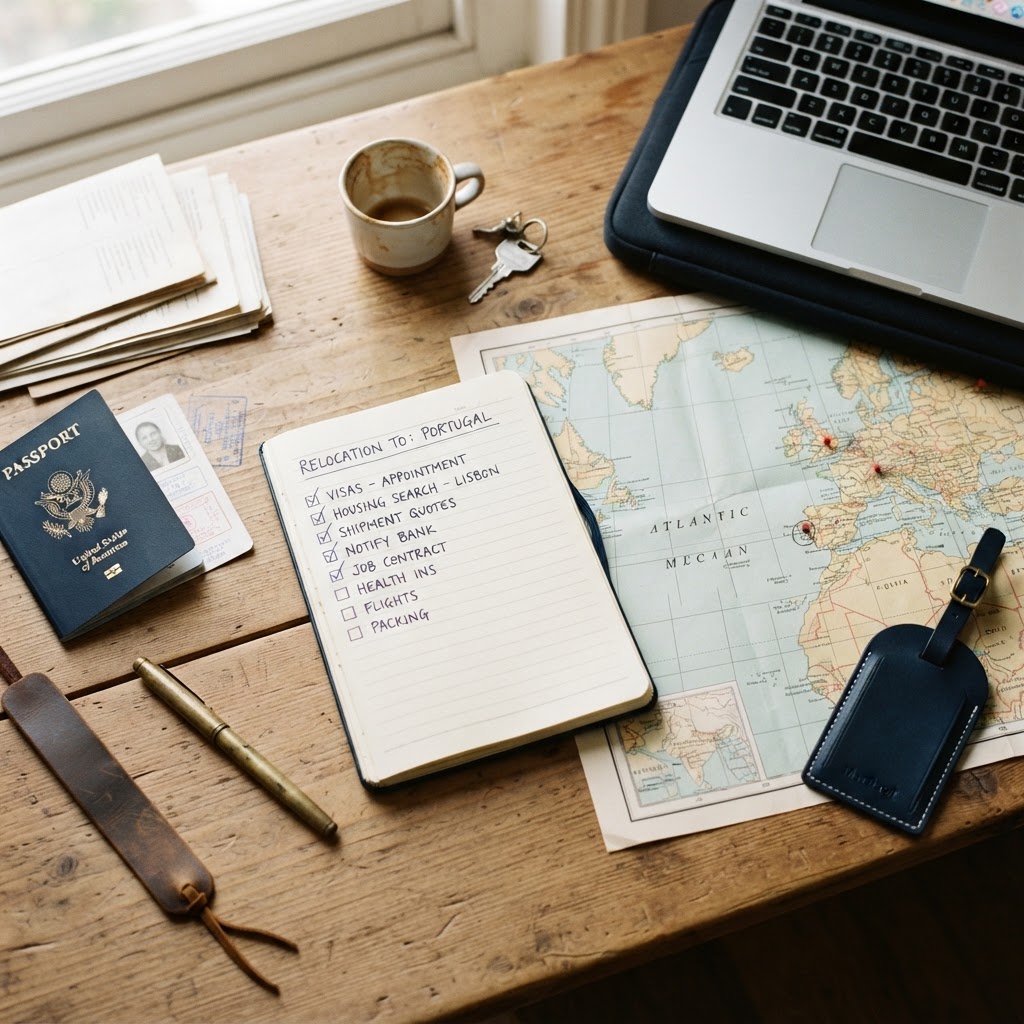
Moving abroad can start with a surprisingly simple thought:
“What if I lived somewhere else?”
Then the questions arrive.
- Where could I go?
- Could I legally live there?
- How much money would I need?
- Could I work?
- What about healthcare?
- Taxes?
- Housing?
- Visas?
- Family?
- Pets?
And suddenly, moving abroad feels less like an exciting possibility and more like a research project with 47 browser tabs open.
There is a better way to approach it.
Before worrying about shipping companies, one-way flights or apartment listings, work through the decisions in the right order.
At AbroadFit, we use a five-stage framework:
Pathway → Feasibility → Country → Plan → Move
Each stage answers a different question:
- Pathway: What kind of move could work for you?
- Feasibility: Can you realistically make that move?
- Country: Which destinations fit your circumstances?
- Plan: What needs to happen to make the move possible?
- Move: How do you execute the relocation successfully?
This guide walks you through all five.
Step 1: Find Your Pathway
One of the most common mistakes people make when thinking about moving abroad is starting with a country.
“I want to move to Portugal.”
“I'd love to live in Japan.”
“Maybe Spain.”
But the more useful first question is:
How could you qualify to live abroad?
Your available pathway will often determine which countries should even make your shortlist.
Common ways people move abroad
Depending on your nationality, income, qualifications, age, family circumstances and goals, your pathway might involve:
Working abroad
You obtain a job overseas and relocate through an employment or skilled-worker route.
This can work particularly well if you have qualifications or experience that employers struggle to find locally.
Your first questions should include:
- Which countries hire people in my profession?
- Do employers sponsor international workers?
- Are my qualifications recognised?
- Are there language or licensing requirements?
- Would my salary realistically cover the local cost of living?
Remote work or digital nomadism
If your income comes from outside the destination country, you may be able to use a remote-worker or digital-nomad pathway where one exists.
But working remotely while physically living in another country is not simply a question of whether your employer lets you use a laptop overseas.
Immigration permission, tax residency, employer obligations and healthcare may all matter.
Retirement abroad
Some countries offer residence routes aimed at retirees or people with pensions, investments or other recurring income.
Your analysis should go beyond the visa's minimum income requirement.
Consider:
- your actual monthly living costs;
- healthcare;
- insurance;
- housing;
- currency movements;
- taxes;
- travel back home; and
- how your financial needs could change later in life.
Studying abroad
University, vocational education and language programmes can create a temporary pathway into another country.
Depending on the destination, students may also receive limited work rights or have opportunities to transition into another residence category after completing their studies.
Starting or investing in a business
Entrepreneurs, investors and founders may have access to business-related pathways.
These can vary enormously.
Some countries focus on innovative businesses. Others require capital investment, job creation, local economic activity or evidence that the business is financially viable.
Family or relationship pathways
Citizenship, ancestry, marriage, partnership or close family connections may create immigration options that are much easier than traditional work or investment routes.
Always investigate these possibilities before assuming you need an employment visa.
Financially independent or passive-income routes
Some destinations provide residency opportunities for people who can demonstrate sufficient independent income or financial resources.
The exact definitions and requirements vary, so distinguish carefully between:
qualifying for a residence permit and being able to afford the lifestyle you want once you arrive.
Those are not the same thing.
Your pathway comes before your destination
You may eventually have several possible pathways.
For example, someone could potentially move abroad through:
- employment;
- remote work;
- retirement income;
- ancestry; or
- entrepreneurship.
That is good news.
Multiple pathways mean more potential countries to investigate.
But before falling in love with a destination, identify the routes that realistically apply to you.
Not sure which pathway fits you?
Free to take. Get your personalised starting point in minutes.
Step 2: Test Your Feasibility
Once you know how you might move abroad, the next question is:
Can the move actually work?
This is the feasibility stage.
And it is where a dream begins turning into a realistic relocation strategy.
A destination may be beautiful, affordable and culturally appealing while still being impractical for you.
Test at least six areas.
1. Immigration feasibility
Ask:
- Is there a legal residence route that fits me?
- Do I meet the income, qualification or employment requirements?
- Can I bring a spouse, partner or children?
- Does the route allow me to work?
- How long can I remain?
- Can the residence status be renewed?
- Could it eventually lead to permanent residence?
- Are there restrictions that would affect my plans?
Never make a major financial commitment based solely on a blog post, social-media video or old immigration article.
Verify immigration requirements against official sources before acting.
2. Financial feasibility
Calculate the move itself and the cost of establishing your new life.
Possible expenses include:
- visa and residence fees;
- document certification or legalisation;
- flights;
- temporary accommodation;
- rental deposits;
- shipping;
- storage;
- insurance;
- transportation;
- school costs;
- pet relocation;
- furniture;
- initial utility deposits;
- professional fees; and
- emergency reserves.
Then calculate your expected monthly cost of living after arrival.
A visa income threshold tells you what immigration authorities require.
It does not necessarily tell you how much you personally need to live comfortably.
3. Income feasibility
Ask what happens to your income after you move.
Will you:
- keep your existing employment?
- seek a local job?
- work remotely?
- operate a business?
- live from investments?
- use a pension?
- combine several sources?
Consider both income stability and currency risk.
A comfortable income in your home country may feel very different once converted into another currency or exposed to different housing, tax or healthcare costs.
4. Healthcare feasibility
Understand how healthcare works before you move.
Depending on the destination and your residence status, you might use:
- a public healthcare system;
- mandatory local insurance;
- employer-provided insurance;
- private international health insurance; or
- a combination.
If you regularly need medication, specialist care or treatment, investigate availability and continuity before choosing the destination.
5. Tax and administrative feasibility
Moving abroad can potentially affect:
- tax residence;
- employment taxation;
- business taxation;
- investments;
- pensions;
- property;
- banking;
- reporting obligations; and
- estate planning.
The rules depend heavily on your countries of citizenship, residence and income.
This is one area where generic online advice should never replace personalised professional advice when substantial money or complex cross-border circumstances are involved.
6. Lifestyle feasibility
Finally, ask whether you would actually enjoy your everyday life there.
Think beyond holiday experiences.
Consider:
- climate;
- language;
- safety;
- transport;
- social life;
- pace of life;
- housing;
- schools;
- internet reliability;
- access to airports;
- proximity to family;
- cultural differences; and
- whether the destination supports the life you want to build.
A place can be an excellent holiday destination without being your ideal home.
Step 3: Choose the Right Country
Now you can start comparing destinations.
Notice the order.
You didn't begin with:
“Which country is cheapest?”
You began with:
“What kind of move could work for me?”
Then:
“What conditions does that move need to satisfy?”
Now country research becomes far more useful.
Build a shortlist instead of searching for one “perfect country”
Start with approximately three to five possible destinations.
For each country, compare the factors that matter to you.
Your criteria might include:
- visa accessibility;
- employment opportunities;
- remote-work rules;
- cost of living;
- healthcare;
- housing;
- taxes;
- language;
- weather;
- safety;
- education;
- transport;
- proximity to family;
- airport connections;
- residency stability;
- long-term settlement potential; and
- quality-of-life preferences.
Not every category deserves equal weight.
Someone moving with school-age children may rank education extremely highly.
A retiree managing ongoing healthcare needs may prioritise medical access.
A remote worker may care more about residency rules, internet infrastructure and time zones.
The right destination is the one that fits your circumstances — not the one that wins somebody else's ranking.
Country first, city second
Choosing Spain is not the same thing as choosing Madrid.
Choosing Mexico is not the same thing as choosing Mérida.
Choosing Thailand is not the same thing as choosing Bangkok.
Once a country survives your feasibility test, compare individual cities or regions.
Housing costs, transportation, employment opportunities, climate and lifestyle can vary dramatically within the same country.
Don't choose a country by guesswork.
Your best-fit destinations depend on your pathway, finances, lifestyle and readiness. Start with the free AbroadFit Quiz.
Free personalised starting point.
Step 4: Build Your Move-Abroad Plan
Once you have a viable pathway and destination, turn the idea into a project.
Your relocation plan should cover several workstreams.
Immigration
Create a list of:
- eligibility requirements;
- required documents;
- application fees;
- appointments;
- translations;
- certifications;
- police certificates;
- medical requirements;
- financial evidence;
- application deadlines; and
- expected processing stages.
Do not book irreversible travel based on an immigration outcome that has not yet been confirmed unless you fully understand the risk.
Documents
Check the expiry dates and requirements for documents such as:
- passports;
- birth certificates;
- marriage certificates;
- divorce records;
- qualifications;
- transcripts;
- professional licences;
- employment references;
- police records;
- medical records;
- vaccination records;
- driving licences;
- financial statements; and
- children's school records.
Some countries may require documents to be translated, notarised, certified or legalised.
Start early.
Money
Build three budgets:
1. Relocation budget What will it cost to get there?
2. Monthly living budget What will normal life cost?
3. Emergency reserve How much financial flexibility will you have if something changes?
Consider keeping access to more than one payment method and researching how you will manage money across currencies.
Income and employment
If you need employment before moving, begin your international job search early.
If you already work remotely, clarify what your employer permits.
If you run a business, investigate the implications of operating that business while resident elsewhere.
If your income comes from pensions or investments, investigate how those payments will reach you and how currency movements could affect your budget.
Healthcare
Before departure, determine:
- what coverage is legally required;
- when local healthcare eligibility begins;
- whether temporary insurance is necessary;
- whether private insurance is appropriate;
- how prescriptions will be handled; and
- how to transfer relevant medical information.
Housing
Avoid assuming you need to sign a long-term lease before arrival.
Depending on the destination, temporary accommodation can give you time to:
- explore neighbourhoods;
- understand transport;
- compare rentals;
- avoid scams; and
- learn what everyday life actually feels like.
Research the documentation landlords commonly require before you arrive.
Tax and financial planning
If your situation involves substantial assets, a business, investments, property, retirement accounts or income from several countries, consider obtaining cross-border professional advice before changing residence.
The best time to discover an unexpected tax consequence is before the move — not after it.
Family planning
If moving with a partner or children, include them in the planning.
Research:
- dependent immigration rights;
- partner work rights;
- schools;
- childcare;
- university options;
- healthcare;
- neighbourhoods;
- language support; and
- social integration.
A destination must work for the household, not just the person leading the relocation.
Pets
International pet relocation can involve:
- microchips;
- vaccinations;
- veterinary certificates;
- import permits;
- quarantine;
- airline restrictions; and
- destination-specific timelines.
Start researching this early if a pet is moving with you.
Step 5: Make the Move
The final stage is execution.
By this point you should know:
- why you are moving;
- how you can legally move;
- where you are going;
- approximately what it will cost; and
- what needs to happen before departure.
Now work backwards from your target move date.
A Simple Moving-Abroad Timeline
6–12 months before
Focus on the big decisions.
- Identify possible pathways.
- Test your financial feasibility.
- Research potential countries.
- Check passport validity.
- Investigate immigration requirements.
- Begin building savings.
- Research employment or income options.
- Identify tax or financial questions requiring professional advice.
- Research schooling where relevant.
3–6 months before
Move from research into preparation.
- Start applicable immigration processes.
- Gather supporting documents.
- Arrange translations or certifications where required.
- Research healthcare and insurance.
- Investigate housing.
- Request international moving or shipping estimates.
- Research banking and money transfers.
- Begin reducing possessions you will not take.
1–3 months before
Start closing the gap between planning and departure.
- Confirm immigration status.
- Arrange travel.
- Book temporary accommodation if needed.
- Arrange insurance.
- Confirm healthcare plans.
- Organise important records.
- Arrange shipping or luggage.
- Notify relevant organisations.
- Plan banking access.
- Create digital backups of important documents.
Final 30 days
Confirm everything.
- Recheck passports and travel documents.
- Confirm flights.
- Confirm accommodation.
- Confirm airport transportation.
- Confirm insurance start dates.
- Check baggage allowances.
- Prepare essential medications.
- Complete required departure administration.
- Keep important documents in your hand luggage.
- Keep accessible funds for your first weeks.
Your first month abroad
Your move is not finished when the plane lands.
Depending on your destination, you may still need to:
- complete residence registration;
- obtain local identification;
- register an address;
- open a bank account;
- enrol in healthcare;
- obtain a local SIM;
- arrange utilities;
- complete tax registrations;
- convert or obtain a driving licence;
- enrol children in school; and
- secure longer-term housing.
Give yourself time to settle.
Moving countries is both a logistical transition and a personal one.
Useful Moving-Abroad Essentials
A few practical items that make travel days and the first weeks abroad easier. As an Amazon Associate, AbroadFit earns from qualifying purchases.
Ceptics 45W Universal Travel Adapter
Travel AdaptorsA compact universal travel adapter for keeping phones, laptops and other devices powered across international destinations.
View on AmazonTravel Inspira Digital Luggage Scale
Luggage & Travel AccessoriesA compact digital luggage scale for checking baggage weight before flights and avoiding last-minute surprises.
View on AmazonTOPBAG Family Passport & Travel Document Organiser
Documents & OrganisationA practical organiser for passports, travel documents, cards and other important paperwork when moving or travelling abroad.
View on AmazonBAGAIL Packing Cubes
Packing & OrganisationReusable packing organisers designed to separate clothing and essentials and make luggage easier to manage.
View on AmazonMiady 2-Pack 10,000mAh Portable Chargers
Technology & ConnectivityPortable power banks for keeping phones and other USB devices charged during travel and day-to-day life abroad.
View on AmazonCommon Mistakes When Planning to Move Abroad
Choosing a country before checking whether you can live there
A beautiful destination is irrelevant if no realistic immigration pathway applies to you.
Start with pathway and feasibility.
Treating a visa income threshold as a living budget
Meeting an immigration requirement does not automatically mean you can comfortably afford your intended lifestyle.
Calculate your own budget.
Planning the move around a flight date
Your legal pathway should usually determine your relocation timeline — not an attractive airfare.
Avoid creating artificial deadlines before understanding immigration processing.
Assuming remote work automatically makes living abroad legal
Permission from an employer and permission from a country's immigration authorities are separate issues.
Tax and employment rules may also apply.
Ignoring healthcare until the end
Healthcare can affect both your immigration eligibility and your monthly costs.
Include it during feasibility research.
Making expensive commitments too early
Avoid unnecessary irreversible commitments while major parts of your plan remain uncertain.
Sequence the move carefully.
Researching endlessly without making decisions
Research is useful until it becomes a substitute for action.
Move through the stages:
Pathway → Feasibility → Country → Plan → Move
At each stage, answer the important questions and continue.
Where Should You Start?
If moving abroad is still an idea rather than a plan, you do not need to know everything today.
You need to answer the next question.
First: What pathways could work for you?
Then: Are they feasible?
Then: Which countries fit those conditions?
Then: Build the plan.
Then: Make the move.
That is the AbroadFit approach.
Find out what your move abroad could look like
Free personalised starting point. No purchase required.
Frequently Asked Questions
How do I start the process of moving abroad?
Start by identifying the legal pathway you could use to live in another country, such as employment, remote work, retirement, study, family, business or another residence route. Then test whether the move is financially and practically feasible before choosing a final destination.
How much money do I need to move abroad?
There is no single amount that applies to every international move. Your budget depends on your destination, immigration route, household size, housing costs, flights, insurance, shipping and the amount of financial reserve you want after arrival. Calculate both your one-time relocation costs and your expected monthly living costs.
Can I move abroad without a job?
Possibly. Employment is only one potential pathway. Depending on the country and your circumstances, other options may include retirement, remote-work, study, family, entrepreneurship, investment or financially independent residence routes. Immigration requirements vary by destination.
Can I move abroad if I work remotely?
Potentially, but remote employment alone does not automatically give you permission to live in another country. You need to check the destination's immigration rules as well as any relevant tax and employment implications.
What is the easiest country to move to?
There is no single easiest country for everyone. A country that is relatively straightforward for one person may be difficult for another because eligibility depends on factors such as nationality, income, qualifications, employment, family connections and the intended length of stay. A better question is: Which countries offer realistic pathways for my circumstances?
What country should I move to?
Choose a country by comparing your legal pathway, budget, income, healthcare needs, lifestyle preferences and long-term goals. Build a shortlist of several realistic destinations and then compare individual cities or regions within them.
How long does it take to plan a move abroad?
The timeline varies considerably depending on your immigration route, destination, documents, employment situation and household. Complex moves may require many months of preparation. Begin with immigration and feasibility research before committing to a departure date.
Should I visit a country before moving there?
Where practical, visiting can help you understand neighbourhoods, transport, climate and everyday life. However, a short visit is not the same as living somewhere. Research long-term practicalities separately from the holiday experience.
What documents might I need when moving abroad?
Common documents can include passports, birth and marriage certificates, financial statements, police certificates, qualifications, employment records, medical records and school records. Requirements vary by country and immigration route, and some documents may need translation, certification or legalisation.
Is moving abroad worth it?
That depends on what you want from the move and whether the destination realistically supports those goals. Rather than treating moving abroad as automatically better or worse than staying where you are, compare the practical trade-offs around income, cost of living, healthcare, family, lifestyle, career and long-term security.
Related Guides
How Much Money Do You Really Need to Move Abroad?
There is no single amount everyone needs to move abroad. Your real number depends on your pathway, household, housing, income gap, relocation costs and emergency reserve. Here’s how to calculate it.
Read GuideCan You Move Abroad With Little or No Money? Here’s What’s Actually Possible
You may not need a huge bank balance to move abroad — but moving with limited savings is very different from moving without a financial plan. Here’s how to work out what may actually be possible.
Read GuideWhat to Bring When Moving Abroad: Pack It, Ship It or Buy It There?
Not everything you own deserves a plane ticket. Use the AbroadFit Pack–Ship–Buy–Leave framework to decide what should come with you when you move abroad.
Read GuideWhat Nobody Tells You About Moving Abroad: 15 Realities to Know Before You Go
Moving abroad can change your finances, routines, relationships and even what you buy at the supermarket. Here are 15 realities worth thinking about before you go.
Read Guide